Category Archives : FREE LESSONS & PRICED LESSONS – The Best of Teacher Entrepreneurs


Easter phrasing, fluency and fun (and a freebie for everyone!)

Easter Rhythm and Rhyme

It was almost Easter, and I found myself fighting off the urge to nod off while my students were reading some of the most entertaining leveled books schools can buy. My primary readers were in a slump. I heard it their robotic, monotone reading. Things needed shaking up with phrasing and pacing with a number of my early readers. I ran the risk of my head falling to my chest and a potential neck injury.

It was time for another Phrasing and Fluency Blitz!

When I taught Reading Recovery, there were times that a student would plateau at a a level for more than a week. We would be advised to take two or three lessons for a phrasing and fluency blitz – rereading some familiar, easier books to rebuild confidence, model and practice phrasing and pick up the pace! Many of our students’ favorites were readers that rhymed, had a lively rhythm and made us both laugh!

I used the freebie The Bunny Hop Easter Song and Movement Activity in Kindergarten poetry books as a music and movement activity. It works particularly well if modeled and echoed first before showing earliest readers the text:

This freebie also has a black and white version included with it – ideal for poetry folders!

It’s all about the Eggs is an Easter Fun Fluency Reader  modeled after I’m All About the Bass (performed by Meghan Trainor, co-written by Meghan Trainor and Kevin Kadish). I’m All About the Bass had been on the radio so much last year that my students knew the tune instantly. I modeled the first read to them, and we practiced a few phrases in isolation before we all enjoyed singing it fluently from beginning to end (over, and over and over again.)


There is a twist on a familiar Fairy Tale in this book that the kids find hilarious (but humor and laughter are topics for other days…).


Limitation of liability: It’s all about the Eggs is not recommended for those who are prone to getting songs stuck in their head or with one last nerve.

Happy Easter everyone!
That Fun Reading Teacher 
TpT Store Prof pic circle

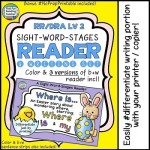
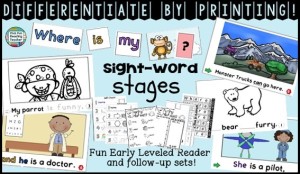
original-1676037-1 Th 1 Easter freebie1 Th1 Where is my...

Related:

SWS page header Easter playlists


FREE LESSONS & PRICED LESSONS – The Best of Teacher Entrepreneurs Marketing Cooperative

161 FREE LESSONS!

Click on the links below to see the free lessons, priced lessons, sales, promotions, and articles by the best teacher entrepreneurs on the Internet!

The Best of Teacher Entrepreneurs Marketing Cooperative

Go to The Best of Teacher Entrepreneurs Blogs 

for even more free lessons!

The Best of Teacher Entrepreneurs

The Best of Teacher Entrepreneurs II

The Best of Teacher Entrepreneurs III


March into Eggstravagant Math….

MMooreEducationalResources

Enjoy a great activity I’ve completed with First Graders & Middle Schoolers! Every year around spring break I’ve enjoyed executing this wonderful fun egg math activity with my students.  There’s minimal prep time and materials for this activity – you will only need plastic eggs, paper for math problems or task cards already printed with answer key, a shoe box, and of course, candy or treats for students.  The students only need paper and a pencil.  Every year all students became very, very involved with this lesson!  Read more on how I executed this Eggstravagant Math Activity with my students!


1.) Begin preparations.
I put together a sheet of math problems or task cards that are numbered.  I typically always utilized task cards for students to review what has been taught all year that I want students to review.  You may also utilize math problems related to the current curriculum you’ve been teaching.  Cut task cards or printed math problems apart into one problem per small sheet of paper.  Have an answer key printed with the numbered problems – you’ll need this the day of the activity.  This activity may also be completed with any subject being taught!


2.) Put together materials.
Place the individual math problems or task cards into a plastic Egg.  They may be folded if you need to.  Make sure you have enough eggs for students.  I typically have double the eggs than the amount of students I teach.  You will, at minimum, need the total number of eggs to be the total number of students you have in your class.  I always based the number of problems and eggs I had on the ‘fastest working’ students I had and the number of students I was teaching.  It’s better to have too many math problems and eggs than not enough.  I wanted them to work through the whole class time.  Fill all of your plastic eggs with……  Read More at www.MMooreEducationalResources.com


A great activity I hope you read about and enjoy with your learners…


Sincerely,  Ms Moore

MooreResoBannerFB3PIN


Visit & Follow me….

www.MMooreEducationalResources.com

TpT Store: https://www.teacherspayteachers.com/Store/Moore-Resources


English Grammar Cheat Sheet

https://www.teacherspayteachers.com/Product/English-Grammar-Cheat-Sheet-1060635english grammar sheet

PRODUCT DESCRIPTION

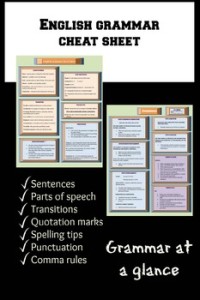
This “Cheat Sheet” was designed to help students while writing in English. This at a glance 2 page sheet is colorful and has an easy to find layout to help students remember certain important things while they write.

I allow my students to use this in class when writing a test. This is not a grammar lesson, but it will remind students about the grammar they’ve learned in the past.

Some of the reminders included:

– parts of speech
– transitional words
– quotation marks (how and when to use them)
– basic sentence structure
– spelling tips (plurals of nouns and IE rule)
– puncutaion rules (apostrophe, colon, semicolon

The other side of the page has comma rules:
– with coordinate conjunctions
-with introductory elements
– with other elements (dates, parenthetical expression, nouns in a direct address)
– with adjectives
-with apositives

It also contains tips on things to avoid, such as writing a paragraph shorter than 4 sentences. And, it contains a list of things to do, such as make sure that your paragraphs contain at least 2 pieces of evidence.

It’s teaching made easy!


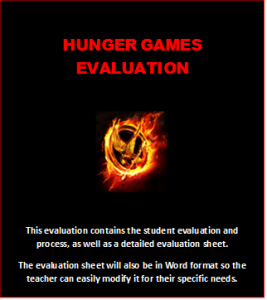
Hunger Games Evaluation

https://www.teacherspayteachers.com/Product/Hunger-Games-Evaluation-1062952hunger games evaluation

PRODUCT DESCRIPTION

This is a culminating evaluation for Suzanne Collins’ “The Hunger Games”. This evaluation allows students to explore the novel’s theme of injustice in a mini-research paper by exploring some of the injustices in our world and by making associations with the novel. Students are also asked to think of ways we can help improve these unjust situations in our world.

The evaluation itself is in PDF format and is zipped to include the evaluation rubric in Word format for easy adaptations.

I hope you and your students enjoy learning from this evaluation.

It’s teaching made easy!

For contests, promotions and other freebies, visit my Facebook page. https://www.facebook.com/pages/Teaching-Made-Easy/734339640007672


Death of a Salesman Unit (Bundled)

death of a salesmanhttps://www.teacherspayteachers.com/Product/Death-of-a-Salesman-Unit-Bundled-1610583

PRODUCT DESCRIPTION

Death of a Salesman Bundled Unit

Level : grades 11 and 12

This unit has been conceived with the teacher in mind. It contains a Student Guide, a Teacher Guide, and a comprehensive Answer Key. All you have to do is print the packages and teach them. It’s as easy as that! I’ve also included two different options for end unit evaluations, which both contain evaluation grids and answer key.

The unit is, in my opinion, visually appealing and the contents teach analysis of literature.

The bundle contains: (The documents, except for the evaluations, are in PDF format.)

The Student Guide has 16 pages:
-Notes on the American Dream
-An anticipation guide
-An in-depth look at success as it pertains to the lives of the students (which will later on be used to relate to the play’s themes.)
-Thematic comprehension questions for each act
-Activity on motifs and symbols used in the play
-Activity on characterization
-Poem association (Langston Hughes)
-Notes on tragedy (Aristotle’s definition and modern definition)
-Review notes for students

Answer Key contains 29 pages:
-Answers to ALL of the students’ work
-Introduction to Arthur Miller
-Scene guide -Teacher’s comprehensive notes on the play (to help review and to fill students in on signifant symbols….)
-List of themes and how they are developed

Final evaluation contains two different options:
1) A unit test with answer key. Contains 3 essay type questions.
2) An essay. Contains essay topics, work process (steps 1…..), an outline guide, and an evaluation grid.

BOTH EVALUATIONS ARE FORMATTED IN WORD DOCUMENTS FOR EASY CHANGES AND MODIFICATIONS.

The Teacher Guide contains 5 pages:
-Includes 8 complete lessons that leave the teacher nothing to do, but to teach.
Lesson 1: Historical context and pre-reading
Lesson 2: Setting and reading (there are specific pages assigned to each lesson)
Lesson 3: Symbols, Motifs and reading
Lesson 4: Character chart and reading
Lesson 5: Reading
Lesson 6: Reading and a look at the difference between modern and classic tragedy
Lesson 7: Theme development and review
Lesson 8: Evaluation (Option 1 – test (answer key included), Option 2 – Essay (evaluation grid, work process, outline included)

It’ teaching made easy.

For contests, promotions, give aways, and other freebies, visit my Facebook page. https://www.facebook.com/pages/Teaching-Made-Easy/734339640007672

IF YOU ARE NOT ABLE TO OPEN THE ZIP FILE, PLEASE
E-MAIL ME at teachwithpassion101@gmail.com . Be sure to include your e-mail address and buyer’s name. I will send you an attachment directly to your e-mail address.


March Teacher Talk

Posted by Deann Marin of Socrates Lantern

Welcome to our March Teacher Talk.  All of us from the Teacher Talk collaborative would like wish you a Happy St. Patrick’s Day.  We have so many fab things this month from  Women’s History Month to Reading and Math activities, as well as Easter Stem Olympics, there’s even a post on Kite Flying to reward your classes for good behavior. So relax with a cup of coffee or a glass of wine and take a look at what these educators have to say. You’ll be happy you did!

If you’re interested in joining this unique group of teacher entrepreneurs and blogging buddies and our blog linky, sign up here….The Best of Teacher Entrepreneurs Marketing Cooperative. If you decide to join, be sure to mention one of our names. 

****************************************************************** 

Lead Like a Girl

Finding positive role models for our students in Women’s History.

****************************************************************** 

Let’s Go Fly a Kite

  When I taught special needs kids, each month we would do something special for those who earned enough points. One of their favorite activities was to make and fly kites in March. Years later, I was mainstreamed to 6th grade and the children also loved this activity. After they flew their kites, they wrote two papers, one explaining how to make a kite and the other about their experience.

****************************************************************** 

Women’s History Month

It’s Women’s History Month. Here are some great books to read to your kids!

****************************************************************** 

Pi Day is March 14th

By Vicky Rauch of Scipi

What is Pi Day? Why was March 14th chosen?

****************************************************************** 


Using Core Words Every Day

By Susan Berkowitz of Susan Berkowitz

Teaching AAC users to communicate doesn’t take a lot of fancy materials or extra planning. Most of the time it’s as simple as engaging the learner with what he likes to do.

******************************************************************


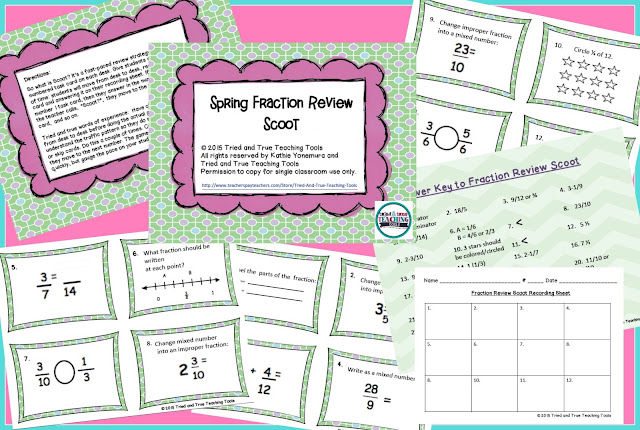
Fast-Paced Fractions

By Kathie Yonemura of Tried & True Teaching Tools

Fraction review is filled with action & movement! Playing Scoot gets students up & moving, while practicing fraction concepts!

******************************************************************

March Into Eggstravagant Math

By M. Moore of Moore Resources

March into an Eggstravagant Math Activity. Enjoy a great activity I’ve completed with First Graders & Middle Schoolers! Every year around spring break I’ve enjoyed executing this wonderful fun egg math activity with my students. There’s minimal prep time and materials for this activity.

******************************************************************

Math Menus

By Shametria L. Routt of The Routty Math Teacher

Menus, a content-focused set of options from which students choose activities and tasks on which to work, are a great way to add some challenge and pizzazz to your everyday mathematics curriculum and can be created for a variety of purposes and designed to include a variety of activities. In this 4-part series, I share four of my favorite math menus that provide instant opportunities for differentiation because students choose which activities they would like to complete based on their own interest and ability levels. Each post describes a different menu, provides examples of how to use it, illustrates advantages and disadvantages, and includes sample work from some of my past students.

******************************************************************

Recharge Your Batteries!

By Megan Bodman of Adventures in Teaching 4th

Get 8 tips for recharging your batteries during the time of year when stress is high!

******************************************************************

Easter STEM Olympics

By Kerry Tracy of Kerry Tracy

Blog post outlines 5 egg-celent Easter-themed STEM challenges that can be modified for use with grades 2-8: Nice Nest, Carrot Carriage, Bean Bind, Basket Bounce, and

 Egg-hanced.

******************************************************************

Increasing Student Time On Task

By Marcy Howe of It’s a Teacher Thing

Increase student time on task with a few simple yet effective tools.

******************************************************************

Zones of Regulation: Using Visuals for Feedback and Self-Regulation

By Thia Triggs of Print Path

Do your children shut down or act out when they hear your voice giving then behavioral cues and feedback?  If so, visual cues can be a lifesaver!

******************************************************************

If This Spells D-E-A-D How Do You Spell Head?

By Susan Berkowitz of Susan Berkowitz

Manipulating sounds in words can be a very difficult task for students who just can’t figure out how the individual sounds go together to make words, and how they can come apart.

******************************************************************

Here’s your chance to hop on over and visit the blog posts of our creative teachers


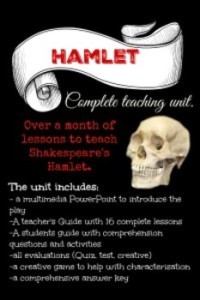
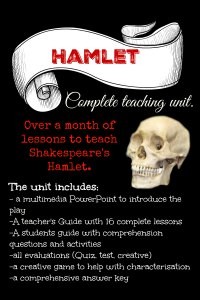
Hamlet Unit (No prep -Complete unit)

Hamlet Unithttps://www.teacherspayteachers.com/Product/Hamlet-Unit-No-prep-Complete-Unit-2398488

One entire month of planning done for you – I dare you to enjoy Shakespeare.

I love teaching Shakespeare’s plays and I want you to love it too. I’ve been teaching and improving this unit for over 10 years. I have literally done all the thinking for you.

This unit has everything a teacher needs to teach Hamlet. I’m aware that not everyone is comfortable with Shakespeare. Because of this, I have created this unit from my years of experience teaching the play so all of the thinking has been done for you. Just photocopy and teach. Seriously it’s that easy.
There’s no longer a need for hours of research and piecing together bits of information and activities found to teach the play.
This is a whole, complete unit, from scene summaries, important notes and annotations notes to help students understand what they are reading. I have also included an introduction to the play, a student guide, a teacher guide, quizzes, a creative assignment, and tests (all with answers and evaluation grids), and a comprehensive answer key. Everything has its place and teaches a specific skill.

The unit is appropriate for students in grades 10, 11 and 12.

The unit includes :

– An attractive, interactive, multimedia PowerPoint presentation introducing the play (17 slides)

-A Student Study Guide (with activities, act and scene questions…) and various activities (14 pages)

-A Teacher Guide (with detailed, comprehensive lessons, unit plan, and additional notes to guide students.) -9 pages and 16 complete lessons. The teacher Guide also includes links to the audiobook (the exact time to cue the audio) AND it includes a list of speaking roles if reading out loud in class)to help with time management and organisation.

-18 pages of comprehensive scene summaries and important notes for each scene (annotations for each scene) ***THIS IS A TEACHER FAVORITE!

-A creative “Guess Who?” game to help students understand the characters. (What’s fun about this game is that it can be played from the beginning of the play right to the end, and students’ answers will change depending on the act they are reading.) LOTS OF FUN!

-A comprehensive answer key for all questions and activities. (24 pages)

-Comprehension quiz on Acts 1 and 2 in Word format for easy modifications (with evaluation grid) and answer key.

-Mid-play evaluation – The Parody – creative writing and analysis (in Word format for easy modifications – with evaluation grid)

-Summary guide (highlighting the significant events from each scene with important analytical information) – Throughout my years of teaching this play, I have amounted excellent notes and annotations, listing the most significant actions throughout each scene. I have retyped these annotations to help you teach the play so your students will understand it (and so will you). (18 pages)

-The culminating evaluation includes three different versions of the final unit test with evaluation grid and answer key (in Word for easy modifications)

Includes a total of 109 pages.

It’s teaching made easy!

IF YOU ARE NOT ABLE TO OPEN THE ZIP FILE, PLEASE
E-MAIL ME at teachwithpassion101@gmail.com . Be sure to include your e-mail address and buyer’s name. I will send you an attachment directly to your e-mail address.


Let’s Go Fly a Kite

By Deann Marin of Socrates Lantern


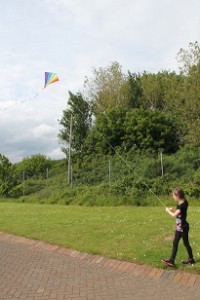
When I taught special needs kids, each month we would do something special for those who earned enough points. One of their favorite activities was to make and fly kites in March. child-flying-a-kite smallYears later, I was mainstreamed to 6th grade and the children also loved  this activity.  After they flew their kites, they wrote two papers, one explaining how to make a kite and the other about their experience.

I am going to show you how to make simple kites that your class will love doing.

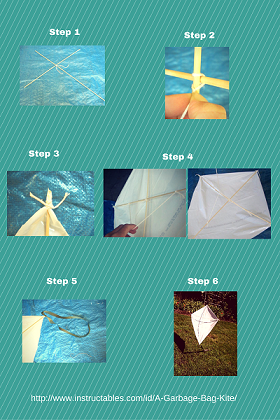
Materials for a garbage bag kite:  plastic bags, two sticks, string, a ribbon and a nice windy day.

Step 1:  Take two sticks, wooden dowels, or garden stakes and put them into the shape of a cross., one horizontally and one vertically. Place the horizontal stick about a third of the way down and tie them together with a string.

Step 2: Wrap the string securely around the horizontal and vertical sticks so that they stay together.

Step 3:  Cut the bag to fit the kite frame. Secure tightly by tying the ends of the bag to the frame at the tip of each dowel or stick.

Step 4:  Tie string from one side of the horizontal stick to the other, make it loose so that it forms a triangle, see first picture in step #4. Tie a large ball of string to thebottom part of the vertical stick. Loop under the loose portion of the horizontal string and tie a knot then tie another knot where the horizontal and vertical strings meet. You’ll know you’ve done it right if you see a triangle shape. See 2nd image in step #4.

Step 5: Tie some colorful ribbons to the end of the kite to give it balance. If it seems flimsy , you can attach washers to the ribbons to add support.

Step 6: Voila, your kites are complete. All you need is a sunny and windy March day and some space for your kids to run with their kites. Have fun. By the way, you can have a contest to see which kite flies the highest or the best.


Another fun thing that I’ve done with the kids is to take them camping at the end of the school year, but that’s another story.


Featured Items

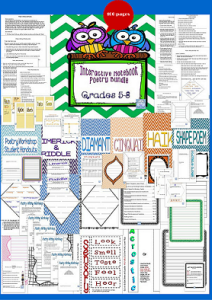
View my Interactive Poetry Notebook at Socrates Lantern's Tpt Store

Interactive Poetry Notebook

Thanks so much for stopping by.

Deann

blog button smallest

************************************************************************************

Please visit Socrates Lantern’s Social Media Sites


*************************************************************************************

March Teacher Talk.003

Before you leave, please take a look at the rest of the blog posts that are part of our March Teacher Talk blog hop.


Free lesson – Introduction to poetry

introduction to poetryUse this free lesson to introduce poetry to your English students from grades 9 to 12. This is the first lesson from my Intermediate Poetry unit, which uses art to help students how to understand and analyze poetry.

The document includes:
-a comprehensive lesson plan
-student notes
-an answer key

IF YOU ARE NOT ABLE TO OPEN THE PDF FILE, PLEASE
E-MAIL ME at teachwithpassion101@gmail.com . Be sure to include your e-mail address and buyer’s name. I will send you an attachment directly to your e-mail address.


St. Patrick’s Day: Motivating students to reading for meaning ~ with humor!

St P humor post

Nothing grabs my students’ attention more than something that is downright silly.

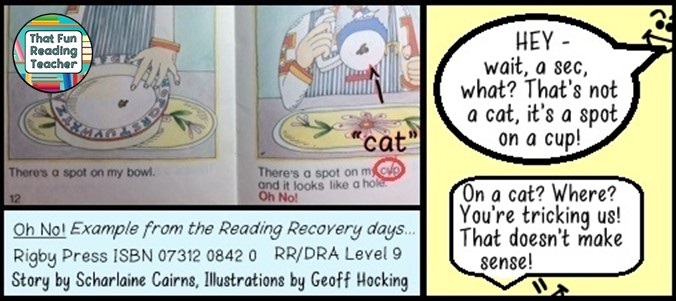
They know I tend to make the odd ‘mistake’ when we’re reading together, and that reading just HAS to make sense. Whenever I sense someone’s attention (or foot, or elbow) beginning to drift, I’ll throw in the odd error, for example:

Oh No!

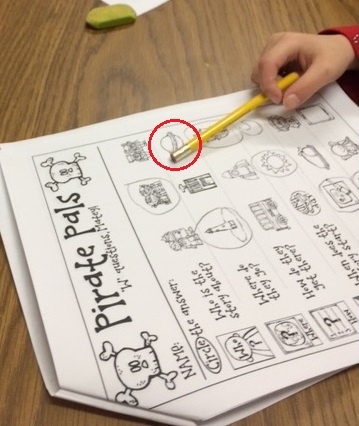
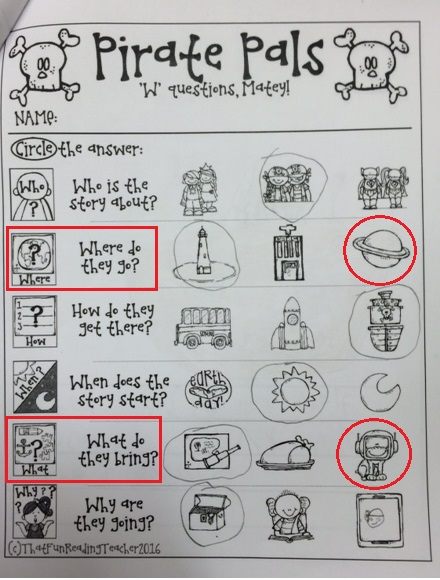
Recently, we have completed the Pirate Pals Read and Write and More booklet together, and it occurred to me, again, that when kids anticipate fun and laughter, they are more willing to invest their energy and focus up front.


Pirate Pals kids joking about space monkey - CopyA 2nd grade student tries to get a  peer to choose ‘Saturn’ instead of the correct answer for the setting question… Pirate Pals Reading Comp photo…then they laugh at the thought of pirates bringing a space monkey on a treasure hunt!

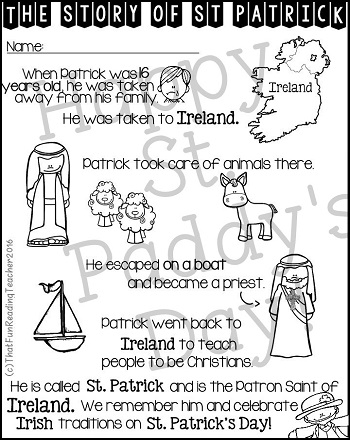
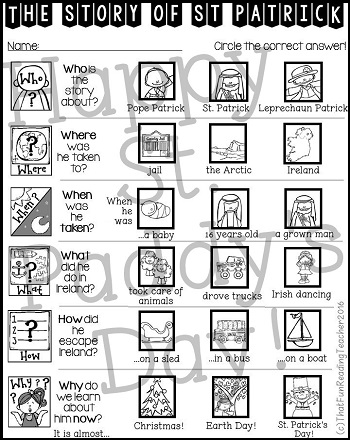
St. Patrick’s Day is upon us. I read the story of St. Patrick to my grade one class years ago, and remember the pre-reading discussion well. A small group of my students believed that St. Patrick was a leprechaun, and others found the idea to be hilarious. The child who had expressed this idea was embarrassed and it had a significant impact on his confidence in sharing in groups, and taking risks in his learning, for some time.

This, of course, took us off-track into a conversation about teasing, laughing at vs. laughing with others.

I’m planning to give the students I see the advantage of knowing the true story of St. Patrick early, so they can be armed to laugh with their classmates!


The St. Patrick’s Day pages below and the Pirate Pals pages above are only two of the elements of the Read and Write and More Series.


St. P's Day Reading Comp JPEG updated

St. P's Day questions JPEG updated

Isn’t laughter the way of the Irish, after all?

Happy St. Patrick’s Day, everyone!

2015 TpT Store Prof pic circle

Related:


Th1 Th1 St P Day Freebie main product cover

More R & W & M Read Rec Sound boxes


FREE WORKSHEET: Subordinating Conjunctions Cheat Sheet for Dependent Clauses!

I teach a writing lab for the community college I work with, and right now we are working on recognizing Independent and Dependent Clauses. (Yep! College students sometimes have to go waaaaaay back to the basics in order to find sentence fragments within their Composition Essays!)

Presentation1

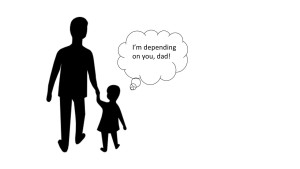
I like to give my students a visual when thinking about parts of sentences. So the first thing I told them is that I have a one-year-old who is about to start walking. Right now, she is holding on to our hands (or walls, or cabinets, or the dog) to help support her walking. Then I ask them, “Is she an independent walker?” Of course the answer is no. “Why?” Their responses were:

“She can’t stand on her own.”

“She relies on other people or things.”

DING! DING! DING! In order to walk, she is DEPENDENT on other people or things. An INDEPENDENT walker is someone who can stand on his or her own.

I then tell them the same goes for Independent or Dependent clauses! “An Independent Clause is a sentence that can totally stand on its own without any help from other clauses. A Dependent Clause relies on other clauses, or complete sentences, to make sense.”

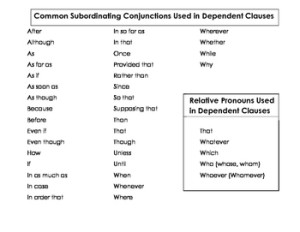
After reviewing types of each, I gave them a Common Subordinating Conjunctions Cheat Sheet to use in order to find fragments (it also includes the five relative pronouns, but I didn’t go too into detail with those–only so much the brain can handle in an hour!). Then I let them know the secret that if their sentence is starting off with one of the words listed on the cheat sheet and does not express a complete thought, it’s probably a fragment.

I hope this cheat sheet helps your students make sense of Independent and Dependent clauses a little bit better!

original-2396375-1 (2)

Signoff


Language Arts: Frankenstein Complete No Prep Unit

Complete Unit

Complete Unit

https://www.teacherspayteachers.com/Product/Frankenstein-Unit-No-prep-1758417


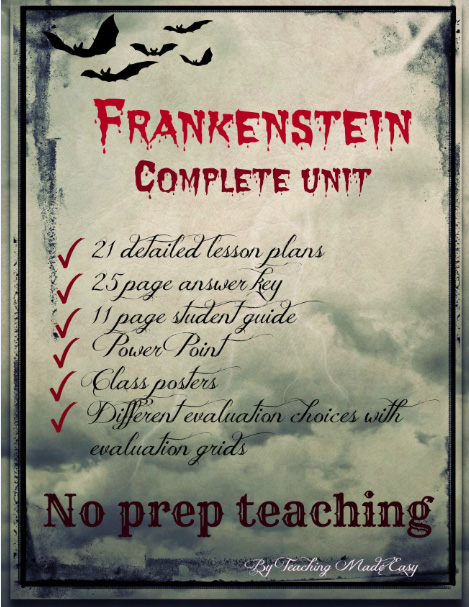
This unit has been created with the teacher in mind. The material is geared toward senior students with a focus on the construction of arguments. It also teaches the importance of historical context as well as literary allusions in the development of themes.

The thinking has all been done for you. The lesson plans are detailed and comprehensive. The student guide is visually appealing and facilitates the teacher’s job. In addition, the answer key is comprehensive and detailed. All the teacher needs to do is to purchase this unit and photocopy it.

Take a look at the preview for more information.

What the unit contains:

1) The Teacher Package (17 pages)

-contains 21 detailed lessons (60-90 minute lessons)
-leading discussion questions and skill building activities (with detailed instructions for the teacher)
-important chapter notes on analysis
-the teacher package helps the teacher stay on task and stay organized because the planning has been done for you.

2) The Student Package (11 pages)

-pre-reading activity
-study guide questions
-a fact sheet regarding the Prometheus myth
-an activity on the use of nature in romantic literature
-an activity based on the symbols in the novel
-several activities that teach argument development
-an activity on theme development

3) A comprehensive answer key (25 pages)

-detailed answers for ALL student activities and work
-an annotate copy of the poem “The Rime of the Ancient Mariner” and activity answer key.

4) Also included:

-a PowerPoint introducing the novel’s historical context and the author
-class posters with key elements in the novel
-a copy of “The Rime of the Ancient Mariner”

5) Various evaluations are also included: ALL EVALUATIONS ARE IN WORD DOCUMENTS IN ORDER TO MODIFY FOR CLASSROOM NEEDS.
– Test on letters 1-4 and chapters 1-10 (choice between multiple choice OR development questions)
-Test on chapters 11-18 (choice between multiple choice OR development questions)
-Unit evaluation (Choice between and essay, a debate, a unit test – all work process is included)
ANSWER KEYS AND EVALUATION GRIDS ARE INCLUDED FOR ALL EVALUATIONS.

*As a bonus, I have included two automatic comment generators for Word documents (with drop down boxes.)


Teach Your Students This Gerund “Trick”!

Gerunds, infinitives, and participles, OH MY! Yeah. . .they are not the most titillating thing in the world to teach. In fact, when I had to teach the unit, I had to relearn all the terminology all over again (honestly, I don’t even recall any of my teachers specifically teaching the “gerund.” Hmmmm). Thus, why I think the most confusing aspect of the Verbals is the gerund: firstly, it’s hard to pronounce, and, secondly, what the HECK is its function?! (Even though I pronounced it correctly several times a day, half the students still insisted on calling it a “Grrrr-uh-nd.” Um. Nope, but as long as you know what it does, you could call it “Sally” for all I care! 🙂 )

Anywho, I came up with a “trick” that works almost every time when trying to detect a gerund in a sentence. I call it the “IT” rule. “IT” definitely helped my students become much more clear on if the -ing word was a gerund or just a participle. So here is my simple  “IT” trick:

Because a gerund functions as a noun, I taught my students to replace the -ing word with a noun in the sentence: “IT.” If the sentence still makes sense, it’s probably (stress the probably) a gerund. For example:

Example 1: She loves dancing.

Change to: She loves IT.

YEP! We have a gerund!

Example 2: She is dancing in the rain.

Change to: She is IT in the rain.

Hmmm, NOPE. Not a gerund.

You may not like this trick or it may work really well for you. Either way, I am just glad I can share!

Happy gerund-ing!


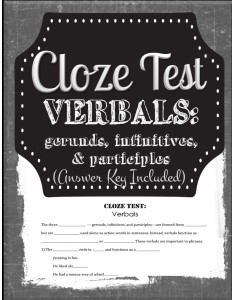
Two products to help you teach this unit:

VerbalsJPGCloze Test


——————————————————————————————————–

Your Best Draft Banner


Language arts: Poetry Unit for Junior Students (NO PREP)

This poetry unit has been created to help our Young people find the courage to stand up for something they believe in.


Int poetry thumbhttps://www.teacherspayteachers.com/Product/Poetry-Unit-for-Intermediate-Students-1020615


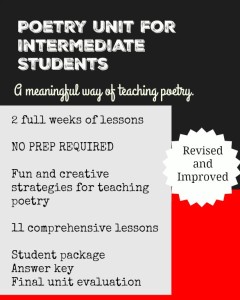
2 weeks of thinking done for you. This unit is appropriate for grades 8-10

Looking for a meaningful and effective way to teach poetry? This unit is a fun way to learn and experiment with figurative language. It uses a mixture of contemporary songs and traditional poetry to teach students about themes and to help them learn the various forms of poetry. The creative, hands-on activities also focus on the importance of having a voice and using it properly.

The unit covers subjects such as: bullying, courage, standing up for yourself and for others, standing up for one’s convictions and discovering what is important to students.

This unit uses poetry to help students have a better understanding of themselves and to stand up for things they believe in.

The files are in PDF format and are zipped for convenience.

-1 set of « I HAVE, Who has? » cards to help students remember figurative language in a fun way. (1 set of instructions for the game)

-A comprehensive teacher guide with 11 complete and detailed lessons (no prep required) – (8 pages) – EVERYTHING YOU NEED TO TEACH THIS UNIT HAS BEEN DONE FOR YOU

-A student package that contains ALL notes, poems, and handouts students will need for the unit (18 pages)

-An end unit evaluation (with detailed evaluation rubrics and step by step instructions for students – one for the written component and one for the oral component). The end unit evaluation is in Word format along with the evaluation rubric for easy modifications. The final unit evaluation is a written poem and poetry reading, where students’ voices can be heard.

-A detailed Answer Key with notes, annotated poems, and answers to questions and activities. (8 pages)

Poems studied include:
– Song lyrics – Jessie J’s “Domino” (Goal : review figurative language and analyze messages found in popular media.)
– Jonathan Reed’s “The Lost Generation”
– Selena Matis’ “Ability”
– Robert Frost’s “The Road not Taken”
– Robert Hayden’s “ Those Winter Sundays”
– Song lyrics “True Colors”
– Emily Dickenson’s “Hope is the Thing with Feathers”
– Rudyard Kipling’s “If”
– Maya Angelou’s “Phenomenal Woman”
– There are also video links added to the unit to enhance learning in the classroom


Language Arts – Hamlet Unit (One month planning – NO PREP REQUIRED)

Hamlet thumbhttps://www.teacherspayteachers.com/Product/Hamlet-Unit-No-prep-Complete-Unit-2398488


One entire month of planning done for you – I dare you to enjoy Shakespeare.

I love teaching Shakespeare’s plays and I want you to love it too. I’ve been teaching and improving this unit for over 10 years. I have literally done all the thinking for you.

This unit has everything a teacher needs to teach Hamlet. I’m aware that not everyone is comfortable with Shakespeare. Because of this, I have created this unit from my years of experience teaching the play so all of the thinking has been done for you. Just photocopy and teach. Seriously it’s that easy.
There’s no longer a need for hours of research and piecing together bits of information and activities found to teach the play.
This is a whole, complete unit, from scene summaries, important notes and annotations notes to help students understand what they are reading. I have also included an introduction to the play, a student guide, a teacher guide, quizzes, a creative assignment, and tests (all with answers and evaluation grids), and a comprehensive answer key. Everything has its place and teaches a specific skill.

The unit is appropriate for students in grades 10, 11 and 12.

The unit includes :

– An attractive, interactive, multimedia PowerPoint presentation introducing the play (17 slides)

-A Student Study Guide (with activities, act and scene questions…) and various activities (14 pages)

-A Teacher Guide (with detailed, comprehensive lessons, unit plan, and additional notes to guide students.) -9 pages and 16 complete lessons. The teacher Guide also includes links to the audiobook (the exact time to cue the audio) AND it includes a list of speaking roles if reading out loud in class)to help with time management and organisation.

-18 pages of comprehensive scene summaries and important notes for each scene (annotations for each scene) ***THIS IS A TEACHER FAVORITE!

-A creative “Guess Who?” game to help students understand the characters. (What’s fun about this game is that it can be played from the beginning of the play right to the end, and students’ answers will change depending on the act they are reading.) LOTS OF FUN!

-A comprehensive answer key for all questions and activities. (24 pages)

-Comprehension quiz on Acts 1 and 2 in Word format for easy modifications (with evaluation grid) and answer key.

-Mid-play evaluation – The Parody – creative writing and analysis (in Word format for easy modifications – with evaluation grid)

-Summary guide (highlighting the significant events from each scene with important analytical information) – Throughout my years of teaching this play, I have amounted excellent notes and annotations, listing the most significant actions throughout each scene. I have retyped these annotations to help you teach the play so your students will understand it (and so will you). (18 pages)

-The culminating evaluation includes three different versions of the final unit test with evaluation grid and answer key (in Word for easy modifications)

Includes a total of 109 pages.

It’s teaching made easy!


Language Arts – Hamlet Unit (over a month of prepared lessons) NO PREP

Do you have to teach Shakespeare and not know where to start?  Start here.  All of the planning has been done for you.


https://www.teacherspayteachers.com/Product/Hamlet-Unit-No-prep-Complete-Unit-2398488Hamlet thumb

One entire month of planning done for you – I dare you to enjoy Shakespeare.

I love teaching Shakespeare’s plays and I want you to love it too. I’ve been teaching and improving this unit for over 10 years. I have literally done all the thinking for you.

This unit has everything a teacher needs to teach Hamlet. I’m aware that not everyone is comfortable with Shakespeare. Because of this, I have created this unit from my years of experience teaching the play so all of the thinking has been done for you. Just photocopy and teach. Seriously it’s that easy.
There’s no longer a need for hours of research and piecing together bits of information and activities found to teach the play.
This is a whole, complete unit, from scene summaries, important notes and annotations notes to help students understand what they are reading. I have also included an introduction to the play, a student guide, a teacher guide, quizzes, a creative assignment, and tests (all with answers and evaluation grids), and a comprehensive answer key. Everything has its place and teaches a specific skill.

The unit is appropriate for students in grades 10, 11 and 12.

The unit includes :

– An attractive, interactive, multimedia PowerPoint presentation introducing the play (17 slides)

-A Student Study Guide (with activities, act and scene questions…) and various activities (14 pages)

-A Teacher Guide (with detailed, comprehensive lessons, unit plan, and additional notes to guide students.) -9 pages and 16 complete lessons. The teacher Guide also includes links to the audiobook (the exact time to cue the audio) AND it includes a list of speaking roles if reading out loud in class)to help with time management and organisation.

-18 pages of comprehensive scene summaries and important notes for each scene (annotations for each scene) ***THIS IS A TEACHER FAVORITE!

-A creative “Guess Who?” game to help students understand the characters. (What’s fun about this game is that it can be played from the beginning of the play right to the end, and students’ answers will change depending on the act they are reading.) LOTS OF FUN!

-A comprehensive answer key for all questions and activities. (24 pages)

-Comprehension quiz on Acts 1 and 2 in Word format for easy modifications (with evaluation grid) and answer key.

-Mid-play evaluation – The Parody – creative writing and analysis (in Word format for easy modifications – with evaluation grid)

-Summary guide (highlighting the significant events from each scene with important analytical information) – Throughout my years of teaching this play, I have amounted excellent notes and annotations, listing the most significant actions throughout each scene. I have retyped these annotations to help you teach the play so your students will understand it (and so will you). (18 pages)

-The culminating evaluation includes three different versions of the final unit test with evaluation grid and answer key (in Word for easy modifications)

Includes a total of 109 pages.

It’s teaching made easy!


Language Arts: Frankenstein complete unit (NO PREP)

A full month and a half of planned lessons.


This unit has been created with the teacher in mind. The material is geared toward senior students with a focus on the construction of arguments. It also teaches the importance of historical context as well as literary allusions in the development of themes.

The thinking has all been done for you. The lesson plans are detailed and comprehensive. The student guide is visually appealing and facilitates the teacher’s job. In addition, the answer key is comprehensive and detailed. All the teacher needs to do is to purchase this unit and photocopy it.

Take a look at the preview for more information.

What the unit contains:

1) The Teacher Package (17 pages)

-contains 21 detailed lessons (60-90 minute lessons)
-leading discussion questions and skill building activities (with detailed instructions for the teacher)
-important chapter notes on analysis
-the teacher package helps the teacher stay on task and stay organized because the planning has been done for you.

2) The Student Package (11 pages)

-pre-reading activity
-study guide questions
-a fact sheet regarding the Prometheus myth
-an activity on the use of nature in romantic literature
-an activity based on the symbols in the novel
-several activities that teach argument development
-an activity on theme development

3) A comprehensive answer key (25 pages)

-detailed answers for ALL student activities and work
-an annotate copy of the poem “The Rime of the Ancient Mariner” and activity answer key.

4) Also included:

-a PowerPoint introducing the novel’s historical context and the author
-class posters with key elements in the novel
-a copy of “The Rime of the Ancient Mariner”

5) Various evaluations are also included: ALL EVALUATIONS ARE IN WORD DOCUMENTS IN ORDER TO MODIFY FOR CLASSROOM NEEDS.
– Test on letters 1-4 and chapters 1-10 (choice between multiple choice OR development questions)
-Test on chapters 11-18 (choice between multiple choice OR development questions)
-Unit evaluation (Choice between and essay, a debate, a unit test – all work process is included)
ANSWER KEYS AND EVALUATION GRIDS ARE INCLUDED FOR ALL EVALUATIONS.

*As a bonus, I have included two automatic comment generators for Word documents (with drop down boxes.)


Language Arts: Poetry Unit for Senior Students (2 weeks – NO PREP)

https://www.teacherspayteachers.com/Product/Poetry-Unit-for-senior-students-1107375

Complete NO PREP unit

Complete NO PREP unit


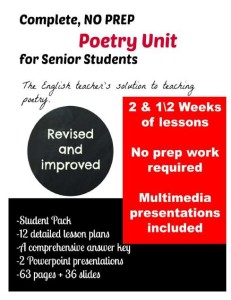
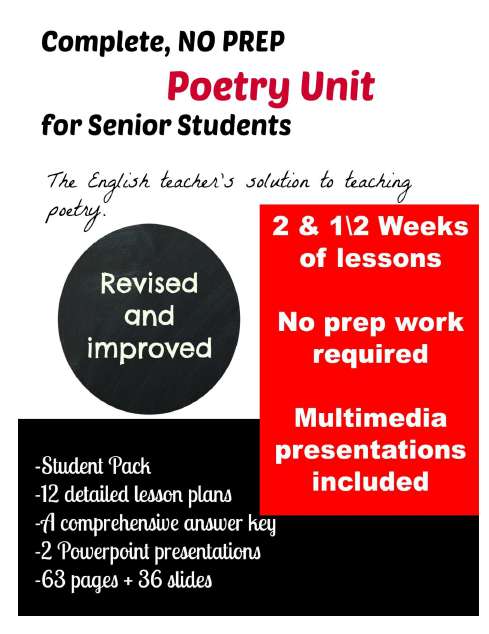
Many teachers hate teaching poetry because they don’t know where to begin. This unit will make you and your students love poetry. This complete, no prep unit is a great way to start! This 2 and a half week unit includes a student guide, 12 detailed lesson plans, 2 multimedia presentations (no internet connection required), a detailed answer key with annotated poems, and an end of the unit evaluation with answer key.

Just print it and teach it.

This HUGE bundle includes:

This poetry unit has been devised to teach students the importance of :
• Figurative language (its uses and effects)
• How to read poetry
• How to understand and apply symbolism and imagery
• The importance of rhythm
• The importance of tone and attitude in a poem
• Types of poetry
• How to analyse poetry
• How to appreciate poetry (even when you don’t understand it)

This unit’s focus is the analysis of poetry and teaches students how to make inferences, which is a skill they must learn for their other subjects as well.

Poems include authors such as: Emily Dickenson, Dorothy Parker, Maya Angelou, Thomas Gray, Lord Alfred Tennyson, Alfred Noyes, T.S. Eliot, Shakespeare, Elizabeth Barrett Browning, Robert Frost, Pearl Jam, Langston Hughes, and Walt Whitman. The Unit includes 21 different poems.

The unit has been conceived to last 12 days – with 65 minute periods (although they are easy to modify).

The unit contains:

1 – The teacher guide (Contains 12 comprehensive lesson plans to teach the poems included in the unit. EVERYTHING YOU NEED TO TEACH THIS UNIT HAS BEEN DONE FOR YOU. )

2 – The student package (Contains students’ notes , poems, and questions) (26 pages)

3 – The answer key includes annotated poems and answers to all student activities (saving you time).

4 – Included is a test with multiple choice questions as well as a development question. All answers are included. (Word format for easy changes)

5 – 2 PowerPoint presentations – one multimedia presentation to introduce the unit (17 slides) and the second to reinforce the use of imagery and symbolism (19 slides) – NO INTERNET CONNECTION REQUIRED

A total of 63 pages + 36 slides are included in this package.

This unit is complete, and does all of the thinking for you. All you need to do is to print out and photocopy the student package and you’re set.


Read and Write and DIFFERENTIATE by printing – for Valentine’s Day!

Read and Write and DIFFERENTIATE by printing - for Valentine's Day!

A significant part of my support role to kindergarten and primary teachers in recent years has been to provide instruction and / or resources to differentiate instruction for little people in literacy.

Within one class, the range of abilities can span four grades. A little one’s tolerance to frustration towards a task that is too difficult, or another’s need for something to challenge his or her learning for just the right amount of time, can be a tough order to fill – especially at the same time – after gym and snack time and before recess, library and reading buddies.

I have designed my Read and Write and More packages to allow teachers to #DifferentiateByPrinting. There are always activities in each of these products to address a variety of needs.

Valentine Scrambled Sentences:

(Note: The colored sentence strips shown in the first example are provided in the Valentine’s Day Read and Write and More set. There are two different sentence options to choose from to photocopy onto each color paper, with six identical scrambled sentences on each strip).


Val sent sheet  Slide6 Slide7

Having the option to place and paste sentence strips, place and copy sentence strips, work without the strips on easier or more challenging sentences, means that many pre-writers, early writers and / or are independent writers have an accessible starting point.


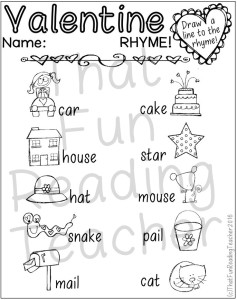
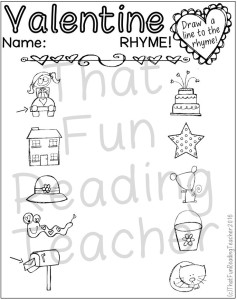
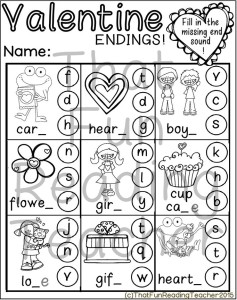
Valentine Rhyme and Ending Sounds:

See it, hear it, read it? Assessment or  fun practice activities?
I use the following pages for fun small group review, then send them home for the fridge, where my wish is for the back-of-the-cereal box effect.

When I am doing the following rhyme activity with students, I am mindful of my data. Those who need more practice listening for rhyme and ending sounds and who automatically compare letter patterns at the ends of words will get the sheet without print. Proficient rhymers who need more practice with looking closely at print will get the copy with the words. And, of course, other days there will be other activities for those who do not fit neatly into those categories. 


Slide5 Slide4 Slide3

Check out these fantastic ideas and resources on our Rhyme Time board below:
Follow That Fun Reading Teacher’s board Rhyme Time! on Pinterest.


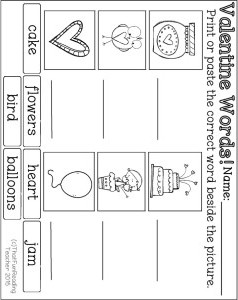
Valentine’s Day Read and Write and More contains a number of other fun literacy activities, including:


Slide2->

Graphic Organizers, Writing Paper,

B & W Cards to color with insert ->

Valentine Graphic Organizers and Cards

And for another day…

…activities for the 100th day of school!


The Read and Write and More sets always contain three-part graphic organizers, thematic writing paper, and fun, literacy activities with an explanation page, ideas and options to help make activities accessible to a wide range of kindergarten to grade 2 students.

We all remember our little students on Valentine’s Day. Check out the freebies below to be sure no one is missed!

2015 TpT Store Prof pic circle Happy Valentine’s Week, my friends!  


Th1 Valentine Th Staffroom Valentine Cards cover 400 Th1 Reading Buddies V

Save with Bundles!


Th1 Th1 Val Bundle Cover Th1 Winter Valentine Bundle.png


February Teacher Talk

Posted by Deann Marin of Socrates Lantern


Welcome to our February Teacher Talk.  All of us from the Teacher Talk collaborative would like wish you a Happy Valentines Day.  We have so many fab things this month from  proof-reading ideas, to ELA to math activities, to celebrating Black History Month and President’s Day, you don’t want to miss reading these blog posts from some awesome educators.

If you’re interested in joining this unique group of teacher entrepreneurs and blogging buddies and our blog linky, sign up here….The Best of Teacher Entrepreneurs Marketing Cooperative. If you decide to join, be sure to mention one of our names. 

<<<<<<<<<<<<<<<<<<<<<<<<<<<<<<<<<<<<<<<<<<<<<<<<<<<<<<<<<<<

The Proof is in the Pudding, Proof-Reading That Is!

As a veteran English and Social Studies teacher, I’d like to share some effective proof-reading tips that I’ve used to help students improve their writing skills, and to make my life a bit easier.


<<<<<<<<<<<<<<<<<<<<<<<<<<<<<<<<<<<<<<<<<<<<<<<<<<<<<<<<<<<

Love is All We Need

By Retta London of Rainbow City Learning

Just a little inspiration for building confidence and acceptance in your learning community.

<<<<<<<<<<<<<<<<<<<<<<<<<<<<<<<<<<<<<<<<<<<<<<<<<<<<<<<<<<<


IMWAYR: Funny Bones

By Lisa Robles of LisaTeachR’s Classroom

Have you read Funny Bones? Winner of multiple awards and a great informational addition to your Dia de Los Muertos collection!

<<<<<<<<<<<<<<<<<<<<<<<<<<<<<<<<<<<<<<<<<<<<<<<<<<<<<<<<<<<

Valentine’s Day STEM Olympics

By Kerry Tracy of Kerry Tracy
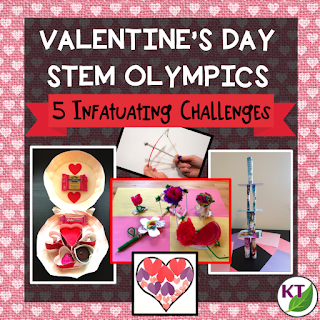
Blog post outlines 5 infatuating Valentine’s Day-themed STEM challenges that can be modified for use with grades 2-8. Help Cupid get some target practice, build a tower of love, design the perfect candy container, find the “heaviest” heart, and have a flower frenzy!

<<<<<<<<<<<<<<<<<<<<<<<<<<<<<<<<<<<<<<<<<<<<<<<<<<<<<<<<<<<

 Cooperative Learning – Bring Core Subjects Together for Student Learning!

By M. Moore of Moore Resources

 Cooperative Learning – Bring Core Subjects Together for Student Learning!

<<<<<<<<<<<<<<<<<<<<<<<<<<<<<<<<<<<<<<<<<<<<<<<<<<<<<<<<<<<

What Word Does This Say: B-L-E-N-D?

By Susan Berkowitz of Susan Berkowitz
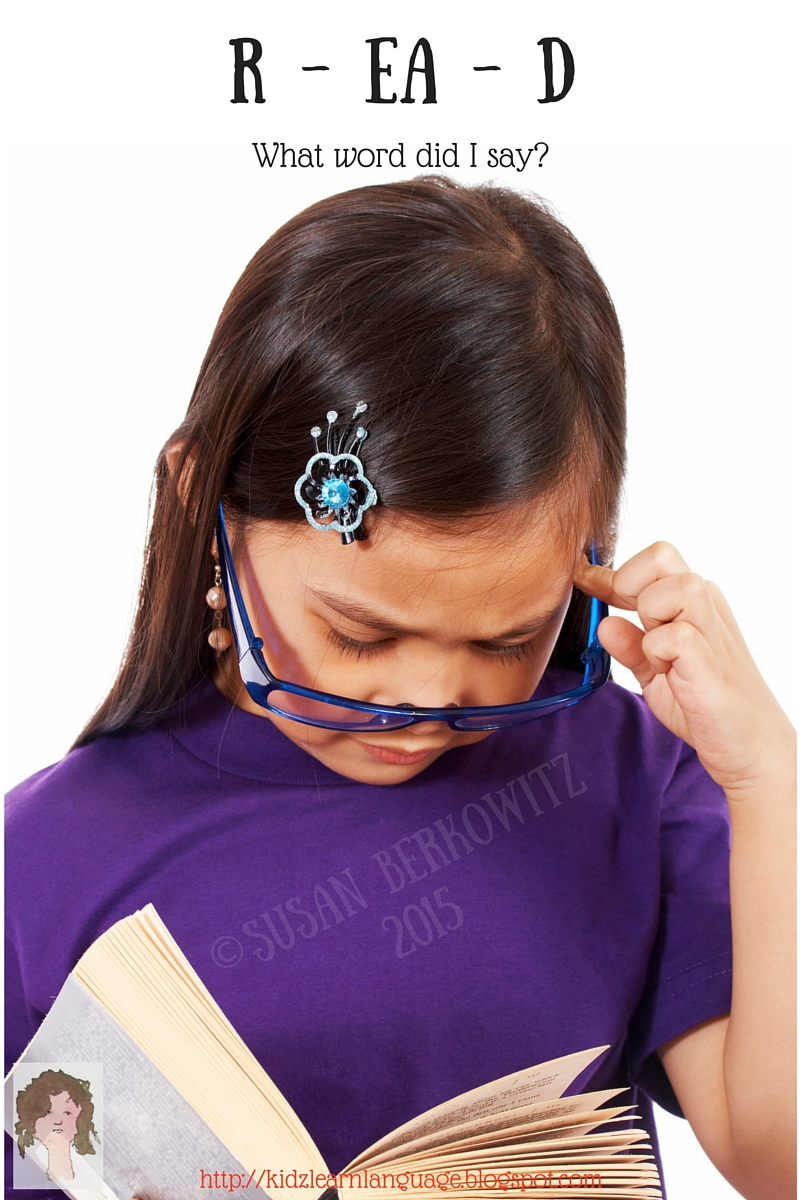
This is part of a series of posts about phonological awareness and the different steps and skills to teach. This post is about blending sounds and syllables to hear the word.

<<<<<<<<<<<<<<<<<<<<<<<<<<<<<<<<<<<<<<<<<<<<<<<<<<<<<<<<<<<

Teaching Self-Regulation Skills to Elementary Age Children

By Thia Triggs of Print Path
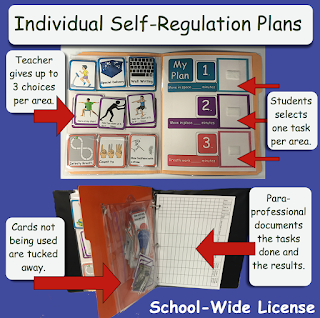
Finally! A systematic method to teach self-regulation skills to children with sensory, emotional, and behavioral needs. Color coded task cards give students managed choices to learn specific skills that meet their sensory needs and also calm them down, so that they can perform their academic classroom tasks.

<<<<<<<<<<<<<<<<<<<<<<<<<<<<<<<<<<<<<<<<<<<<<<<<<<<<<<<<<<<

My Funny Valentine: Love Letters by Arnold Adoff

By Tracy Willis of Wild Child Designs
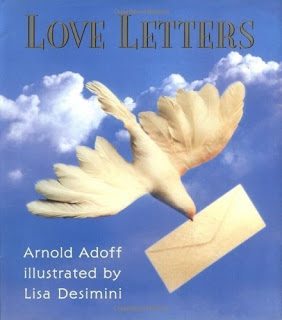
A review and glimpse into “Love Letters” poetry by Arnold Adoff. This post also includes a teaching idea for its use in the classroom.

<<<<<<<<<<<<<<<<<<<<<<<<<<<<<<<<<<<<<<<<<<<<<<<<<<<<<<<<<<<

Robots + Math & Science = Total Engagement

By Megan Bodmann of Adventures Teaching 4th

Get your students engaged in learning by introducing robots into your classroom. They are not only a ton of fun, but you can easily utilize them in your math and science lessons. Find out how easy it is to do!

<<<<<<<<<<<<<<<<<<<<<<<<<<<<<<<<<<<<<<<<<<<<<<<<<<<<<<<<<<<

Playground Problem = Real Life

By Kathie Yonemura of Tried and True Teaching Tools
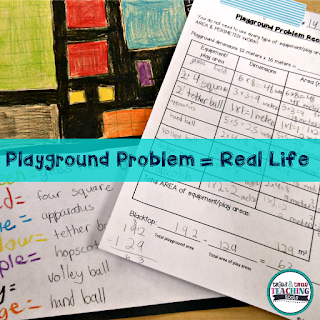
The Playground Problem is a real-life math challenge! It keep students engaged and practicing their area and perimeter skills in a meaningful way.

<<<<<<<<<<<<<<<<<<<<<<<<<<<<<<<<<<<<<<<<<<<<<<<<<<<<<<<<<<<

Understanding Fractions: A 6-Part Series

By Shametria Routt of The Routty Math Teacher

Fractions– a single word that deflates the confidence of our most competent students and adults alike. In this series, I share some of the essential fraction understandings that I have developed over the years, including the many math tools you can use to reinforce these essential skills. With that in mind, each of the six posts highlights a fraction tool and activity that can be used to address a specific Common Core Math Standard (with a few printable freebies too). 

<<<<<<<<<<<<<<<<<<<<<<<<<<<<<<<<<<<<<<<<<<<<<<<<<<<<<<<<<<<

Leveled Math Assessments

By Tammy Roose of Tarheel State Teacher
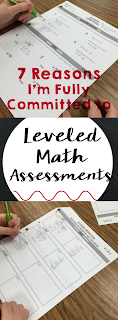
Do your math assessments encourage a growth mindset? Create an entry point for students who are not yet meeting the standards? Allow above average learners to show they know more than just what’s expected for their grade-level? Find out 7 reasons why I’m committed to leveled math assessments this year! 

<<<<<<<<<<<<<<<<<<<<<<<<<<<<<<<<<<<<<<<<<<<<<<<<<<<<<<<<<<<

Here’s your chance to hop on over and visit the blog posts of our creative teachers.

The Proof is in the Pudding-Proof-reading That Is!


By Deann Marin of  Socrates Lantern

As a veteran English and Social Studies teacher, I’d like to share some effective proof-reading tips that I’ve used to help students improve their writing skills, and to make my life a bit easier.


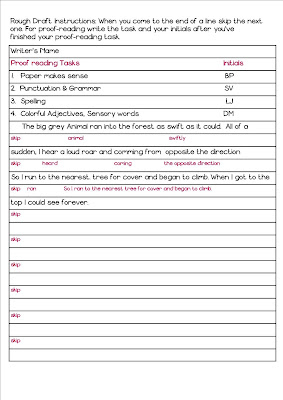
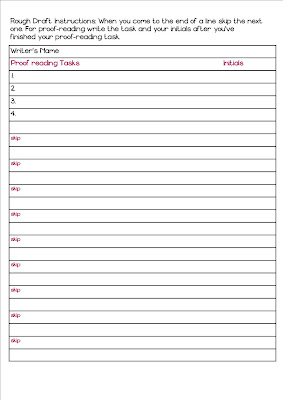
This is simple but a tough one for the kids to remember. When writing a rough draft they should skip a line between sentences. This will leave room for proof-reading comments. We are programmed to finish writing one line and just going to the next, so students will really need to remember this.  I’ve often told them to use a marker or pen and put a dot at the beginning of each line that they should write on. This helps a great deal. Eventually they will get it and it will become second nature.  Also, letting them know that as  part of their final grade, they get credit for skipping lines on their rough draft.

Always write rough drafts with a pencil if not using a computer. At the top of their paper, the student should write each area that will be proof-read.  This depends on what you are teaching at the time. After proof-reading has been finished,each student must initial the part that they corrected.

Proof-reading is a group effort.  So I have the class get into their collaborative groups of 4.  I will direct them and let them know exactly what to do.  Each child will have a specific thing to look for, depending on the lesson. If you’re using sensory words, descriptive adjectives, topic and detail sentences, capitals and end punctuation,  figurative language etc. they will proofread accordingly. It is really up to the individual teacher.  All corrections should be written in pen or different colored pencils. Here are some examples:

  1. One child will make sure that the paper makes sense. They will read it and add corrections on the blank lines.
  2. Another child  will look for colorful words such as adjectives, sensory words.
  3. Someone else will circle spelling errors with red.
  4. The fourth child will fix punctuation and grammar.  They might underline grammar mistakes, or circle them with a blue pencil.

Each child in the group starts with someone else’s paper. I give them a certain amount of time to read and correct it, 10-15 minutes or so. After 15 minutes have passed, they give the paper to the next person in their group, and they do their specific job. This continues until all the corrections have been completed. They must remember to initial the part that they corrected see tip #2.

Once the proof-reading has been finished, I let the class know that they will be reading each other’s paper to them to hear how it sounds.  It’s easier to pick up mistakes when you hear it out loud, rather than reading it to yourself. This can get noisy, so they should use inside voices.

  1. When child A reads child B’s paper, child  B has to listen, and vica versa. You do this for all papers in each group. If errors are picked up, they can be worked on, corrected and read aloud again.

As an extra incentive, tell your kids  that if a paper that they corrected has no mistakes, they will get extra points towards the final grade on their own paper. This will get the class to take this exercise seriously.

  1. John, Sarah, Sally and Andrew are in group A. John fixed spelling errors on the papers in his group.  No one has spelling mistakes, so  I  would give him 4 extra points, 1 point for each paper that has been proof- read.  Do this for everyone in the group. Use your own discretion.

When the final drafts are collected, they should include pre-writing, and rough drafts with comments and corrections. I let the them know that if they’ve followed directions and handed everything in as  instructed, they will get credit for it.

I hope this post has been helpful for you. Would love to hear feedback.

Thanks for stopping by.

Deann

*******************************************************

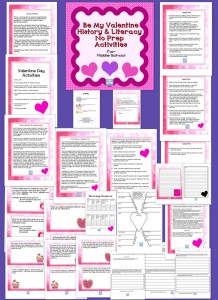
Here’s a Valentine Day Bundle with writing tasks, pr-writing activities, rough draft and more.

Recently Updated

Valentine Literacy Bundle

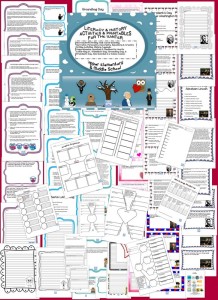
Take a look at my Winter Literacy &amp; History Bundle with Items that will spark the curiosity of you and your students…..
Recently Updated1

Winter Literacy History No Prep Printables

***************************************************

Please visit Socrates Lantern’s Social Media Sites


***************************************************

This is part of February Teacher Talk. Don’t forget to read what the rest of these educators  have to say….


Color Me! Spelling Test Templates

original-2179772-1

Check out the spelling test templates I created that allow for students to color an adorable picture as they wait for the next word! My kiddos LOVE taking spelling tests now! They are a MUST in any classroom! I’ve also added different variations of spelling tests, too! (1-20 words, spelling sentences, dictated writing, and more)!


Thanks!

Jamie Paino

www.sparkleinsecond.com


Coloring Page Spelling Tests


Language Arts: Poetry Unit for Senior Students (Complete – No prep)

Do you need to teach poetry, but don’t know where to begin?  This poetry unit is complete.  Just photocopy and teach.


Complete NO PREP unit

Complete NO PREP unit

https://www.teacherspayteachers.com/Product/Poetry-Unit-for-senior-students-1107375


Many teachers hate teaching poetry because they don’t know where to begin. This unit will make you and your students love poetry. This complete, no prep unit is a great way to start! This 2 and a half week unit includes a student guide, 12 detailed lesson plans, 2 multimedia presentations (no internet connection required), a detailed answer key with annotated poems, and an end of the unit evaluation with answer key.
Just print it and teach it.

This HUGE bundle includes:

This poetry unit has been devised to teach students the importance of :
• Figurative language (its uses and effects)
• How to read poetry
• How to understand and apply symbolism and imagery
• The importance of rhythm
• The importance of tone and attitude in a poem
• Types of poetry
• How to analyse poetry
• How to appreciate poetry (even when you don’t understand it)

This unit’s focus is the analysis of poetry and teaches students how to make inferences, which is a skill they must learn for their other subjects as well.

Poems include authors such as: Emily Dickenson, Dorothy Parker, Maya Angelou, Thomas Gray, Lord Alfred Tennyson, Alfred Noyes, T.S. Eliot, Shakespeare, Elizabeth Barrett Browning, Robert Frost, Pearl Jam, Langston Hughes, and Walt Whitman. The Unit includes 21 different poems.

The unit has been conceived to last 12 days – with 65 minute periods (although they are easy to modify).

The unit contains:

1 – The teacher guide (Contains 12 comprehensive lesson plans to teach the poems included in the unit. EVERYTHING YOU NEED TO TEACH THIS UNIT HAS BEEN DONE FOR YOU. )

2 – The student package (Contains students’ notes , poems, and questions) (26 pages)

3 – The answer key includes annotated poems and answers to all student activities (saving you time).

4 – Included is a test with multiple choice questions as well as a development question. All answers are included. (Word format for easy changes)

5 – 2 PowerPoint presentations – one multimedia presentation to introduce the unit (17 slides) and the second to reinforce the use of imagery and symbolism (19 slides) – NO INTERNET CONNECTION REQUIRED

A total of 63 pages + 36 slides are included in this package.

This unit is complete, and does all of the thinking for you. All you need to do is to print out and photocopy the student package and you’re set.


Language Arts – Poetry Unit for Senior Students (No Prep)

Start your second semester off right.  Are you looking for a creative and meaningful way to teach poetry?


Complete NO PREP unit

Complete NO PREP unit

https://www.teacherspayteachers.com/Product/Poetry-Unit-for-senior-students-1107375


Many teachers hate teaching poetry because they don’t know where to begin. This unit will make you and your students love poetry. This complete, no prep unit is a great way to start! This 2 and a half week unit includes a student guide, 12 detailed lesson plans, 2 multimedia presentations (no internet connection required), a detailed answer key with annotated poems, and an end of the unit evaluation with answer key.

Just print it and teach it.

This HUGE bundle includes:

This poetry unit has been devised to teach students the importance of :
• Figurative language (its uses and effects)
• How to read poetry
• How to understand and apply symbolism and imagery
• The importance of rhythm
• The importance of tone and attitude in a poem
• Types of poetry
• How to analyse poetry
• How to appreciate poetry (even when you don’t understand it)

This unit’s focus is the analysis of poetry and teaches students how to make inferences, which is a skill they must learn for their other subjects as well.

Poems include authors such as: Emily Dickenson, Dorothy Parker, Maya Angelou, Thomas Gray, Lord Alfred Tennyson, Alfred Noyes, T.S. Eliot, Shakespeare, Elizabeth Barrett Browning, Robert Frost, Pearl Jam, Langston Hughes, and Walt Whitman. The Unit includes 21 different poems.

The unit has been conceived to last 12 days – with 65 minute periods (although they are easy to modify).

The unit contains:

1 – The teacher guide (Contains 12 comprehensive lesson plans to teach the poems included in the unit. EVERYTHING YOU NEED TO TEACH THIS UNIT HAS BEEN DONE FOR YOU. )

2 – The student package (Contains students’ notes , poems, and questions) (26 pages)

3 – The answer key includes annotated poems and answers to all student activities (saving you time).

4 – Included is a test with multiple choice questions as well as a development question. All answers are included. (Word format for easy changes)

5 – 2 PowerPoint presentations – one multimedia presentation to introduce the unit (17 slides) and the second to reinforce the use of imagery and symbolism (19 slides) – NO INTERNET CONNECTION REQUIRED

A total of 63 pages + 36 slides are included in this package.

This unit is complete, and does all of the thinking for you. All you need to do is to print out and photocopy the student package and you’re set.


English Language Arts – Everything is on Sale!


https://www.teacherspayteachers.com/Store/Teaching-Made-Easy123

For a limited time, everything in my store is 30% off the regular price.  I specialize is making the teacher’s life easier by creating ready-to-teach materials that are visually appealing, academically meaningful (no busy work), creative, and fun to teach.

Check out my store today and easy into your second semester.

30 sale


January Teacher Talk

Posted by Deann Marin of Socrates Lantern


Happy New Year 

All of us from the Teacher Talk collaborative would like wish you a

healthy, happy and wealthy 2016. May all of your wishes and dreams become a reality.


If you’re interested in joining this unique group of teacher entrepreneurs and blogging buddies and our blog linky, sign up here….The Best of Teacher Entrepreneurs Marketing Cooperative. If you decide to join, be sure to mention one of our names. 

*******************************************************

By Deann Marin of Socrates Lantern

As a child of the 60’s I remember so vividly that fateful April day in 1968 when Martin Luther King Jr. was brutally gunned down by James Earl Ray. I remember sitting by the television set, just horrified by what I had just witnessed.

****************************************

By Mary Moore of  Moore Resoources

ALL IN ONE: Statistics, Probability, Classroom Management, Scatter Plots, Student Engagement, & Graphing!

****************************************

By Thia Triggs of Print Path

Help your kids get the most out of waiting in line!

****************************************

By Kathie Yonemura of Tried and True Teaching Tools

A simple strategy for activating prior knowledge and gets students to make connections. 

****************************************

By Shametria Routt of the Routty Math Teacher

Math stations are one of the current hot button topics for educators and the sessions with the longest lines at any math conference because they are not only fun for students but can be adapted to address a whole host of learning styles– more than we can typically address in a whole class setting. However, using math stations effectively in the classroom can seem like an overwhelming endeavor for beginners. To support those teachers who have been wanting to get started with math stations and to share some of my favorite tips and techniques with beginners and novices alike, this 6-part series features the 5 Ws of math stations: Who, What, When, Where, and Why. 

****************************************

By Tammy Roose of Tarheelstate Teacher

Are you ready to harness your greatness in 2016? I’m recommending 3 of my favorite resources for developing new positive habits and being the best you can be! Happy New Year! 

****************************************

By Susan Berkowitz of Susan Berkowitz

Phonological awareness refers to awareness of and access to the sound structure of language. Spoken words are comprised of strings or sequences of phonemes that signal different meanings. Awareness that changes in these sequences result in changes in meaning is crucial in literacy skills development. If a student cannot conceptualize the order of sounds and syllables in words, he cannot associate the sound units with written symbols.

****************************************

By Lisa Robles of LisaTeachR’s Classroom

Books and resources to teach kindness.

****************************************

By Kerry Tracy of  Kerry Tracy

If your 4th – 8th grade students are struggling to produce grade-level writing, start here!

****************************************

By Tammy DeShaw of The Owl Teacher

Are you looking for some great ideas for teaching about Martin Luther King Jr? This blog post is a great opportunity to still teach your reading common core while teaching about this legend. The great part? A freebie to help you get started is included!

****************************************

By Thia Triggs of Print Path

Can you read these letters? Do you know why they are so hard to read? What can we do as teachers to prevent this?

****************************************

By Marypat Mahoney of Just Add Students

Keep writing projects from lingering on and on by using a writing scheduler.

****************************************

Gifts of the New Year

By Retta London of Rainbow City Learning


Now that “the holidays” are over, the decorations are packed away, and the ribbons, bows, tinsel, and paper have been disposed of, many of us think that the huge whoosh of gifting is over. I disagree! January is the perfect time to gift yourself! Here are some gifts that I hope you will lavish upon yourselves during the often cloudy, gray, and chilling days of January!


****************************************


Helping Reluctant Readers Find the Magic

By Marcy Howe of It’s a Teacher Thing

How can you help your reluctant upper elementary and middle school readers? Check out this veteran teacher’s post on how she helps struggling readers.


****************************************


Finding Balance & Doing the Fandango

By Tracy Willis of Wild Child Designs

Quick! Can you stand on one foot and cross your eyes? Me neither! Find out how this teacher is reclaiming her sense of balance.

****************************************


From teaching math to writing to reading to learning how to form letters properly, to celebrating Martin Luther King, you don’t want to miss reading these fabulous blog posts from some awesome educators.


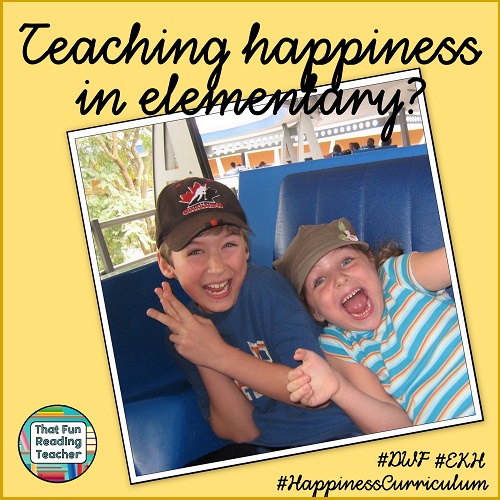
Teaching happiness in elementary?

Happiness Post pic.png


Are you a happy person? Do you remember yourself, siblings, friends and classmates as relatively happy children?

When you think back to your own friends and elementary school classmates, those you have taught over the years, does there seem to be an increase in students struggling with anxiety and / or stress, social and /or emotional issues?

It was once assumed that happiness was a child’s birthright, and thankfully, many children do continue to live happy, carefree lives. Some live very difficult lives.

Many of our students live in that grey,middle zone, where a combination of factors, sometimes one’s models, experiences, genes or things we may not yet be aware of,  might sway their perspective on whether one’s glass is half empty or half full.

Years ago, I taught a child who had fled from Syria with his family, and despite having so little, still stands out in my mind as the most content and grateful little boy I may have ever met. I can think of a number of others who appear to have everything, yet rarely seem genuinely happy. Of course, there are children who seem to have more challenges.

The children we collectively teach are unique individuals from different countries, lifestyles, belief systems, religions and experiences. While they are so different, they are still all the same. They’re children. Children with growing, open minds, who respond to humor, positive attention, role models and respect. And stories.

Many of us have worked with a number of very young, struggling children throughout our careers.

This book is for all children, but especially the glass-half-empty kids. There is so much hope there.

Happy Kids Preview

(And I thank those of you who have requested a ‘Happy Feelings’ book for prompting me to get it done!)

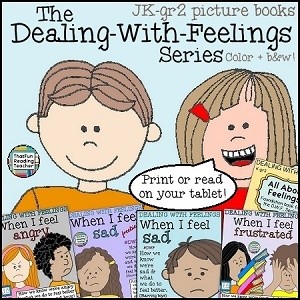
It is similar in style and structure to the popular Dealing With Feelings introductory color story All About Feelings with two child narrators interacting with the audience and each other as they observe some of The Secrets of Happy Kids. 

As I was preparing to write this post, I was curious to see if there was such a thing as a Happiness Curriculum for kids, and was so happy to see that there is! In case you wonder why That Fun Reading Teacher writes about #EmotionalLiteracy, I’ll give it to you straight: Research and experience prove that many children who are overwhelmed with emotional concerns have little to no energy, attention or drive to give to learning to read and write.

Let’s start with happiness. Here are some FREE mini-posters from me to you, with thanks!

Happy Kids Poster FREEBIE.png


2015 TpT Store Prof pic circle

http://thatfunreadingteacher.com/

ThatFunReadingTeacher@gmail.com

Click the symbol above to access my TpT Store! 😉

Related:


Th1 Secrets Happy Kids Th1 Happy Kids Poster FREEBIE DWF th1 300

Why reading enjoyment is just so important TFRT Family Day Th Dos & don'ts of motivating young children to write


FREE LANGUAGE ARTS – Frankenstein Debate Activity and Evaluation

Free debate thumbhttps://www.teacherspayteachers.com/Product/FREE-Frankenstein-Debate-1110546


The Frankenstein Debate Package includes topics for students, a Procedure Sheet to help teachers take notes during the debate, as well as an evaluation sheet.

I hope you enjoy this document.

Check out my store more for free items such as this one.  https://www.teacherspayteachers.com/Store/Teaching-Made-Easy123

It’s teaching made easy!


Language Arts – Frankenstein Unit (Complete – NO PREP required)

Complete Unit

Complete Unit

https://www.teacherspayteachers.com/Product/Frankenstein-Unit-No-prep-1758417

 
This unit has been created with the teacher in mind. The material is geared toward senior students with a focus on the construction of arguments. It also teaches the importance of historical context as well as literary allusions in the development of themes.

The thinking has all been done for you. The lesson plans are detailed and comprehensive. The student guide is visually appealing and facilitates the teacher’s job. In addition, the answer key is comprehensive and detailed. All the teacher needs to do is to purchase this unit and photocopy it.

Take a look at the preview for more information.

What the unit contains:

1) The Teacher Package (17 pages)

-contains 21 detailed lessons (60-90 minute lessons)
-leading discussion questions and skill building activities (with detailed instructions for the teacher)
-important chapter notes on analysis
-the teacher package helps the teacher stay on task and stay organized because the planning has been done for you.

2) The Student Package (11 pages)

-pre-reading activity
-study guide questions
-a fact sheet regarding the Prometheus myth
-an activity on the use of nature in romantic literature
-an activity based on the symbols in the novel
-several activities that teach argument development
-an activity on theme development

3) A comprehensive answer key (25 pages)

-detailed answers for ALL student activities and work
-an annotate copy of the poem “The Rime of the Ancient Mariner” and activity answer key.

4) Also included:

-a PowerPoint introducing the novel’s historical context and the author
-class posters with key elements in the novel
-a copy of “The Rime of the Ancient Mariner”

5) Various evaluations are also included: ALL EVALUATIONS ARE IN WORD DOCUMENTS IN ORDER TO MODIFY FOR CLASSROOM NEEDS.
– Test on letters 1-4 and chapters 1-10 (choice between multiple choice OR development questions)
-Test on chapters 11-18 (choice between multiple choice OR development questions)
-Unit evaluation (Choice between and essay, a debate, a unit test – all work process is included)
ANSWER KEYS AND EVALUATION GRIDS ARE INCLUDED FOR ALL EVALUATIONS.

*As a bonus, I have included two automatic comment generators for Word documents (with drop down boxes.)